|
That unexpected puckering might actually start inside your quilt. ͏ ͏ ͏ ͏ ͏ ͏ ͏ ͏ ͏ ͏ ͏ ͏ ͏ ͏ ͏ ͏ ͏ ͏ ͏ ͏ ͏ ͏ ͏ ͏ ͏ ͏ ͏ ͏ ͏ ͏ ͏ ͏ ͏ ͏ ͏ ͏ ͏ ͏ ͏ ͏ ͏ ͏ ͏ ͏ ͏ ͏ ͏ ͏ ͏ ͏ ͏ ͏ ͏ ͏ ͏ ͏ ͏ ͏ ͏ ͏ ͏ ͏ ͏ ͏ ͏ ͏ ͏ ͏ ͏ ͏ ͏ ͏ ͏ ͏ ͏ ͏ ͏ ͏ ͏ ͏ ͏ ͏ ͏ ͏ ͏ ͏ ͏ ͏ ͏ ͏ ͏ ͏ ͏ ͏ ͏ ͏ ͏ ͏ ͏ ͏ ͏ ͏ ͏ ͏ ͏ ͏ ͏ ͏ ͏ ͏ ͏ ͏ ͏ ͏ ͏ ͏ ͏ ͏ ͏ ͏ ͏ ͏ ͏ ͏ ͏ ͏ ͏ ͏ ͏ ͏ ͏ ͏ ͏ ͏
Hi Bestie,
You finish your quilt, give it that first wash…and suddenly it looks a little different than you remember.
More crinkle here. A little puckering there. Maybe one area seems to have pulled in more than another.
Before blaming your stitching, look at what’s happening inside the quilt.
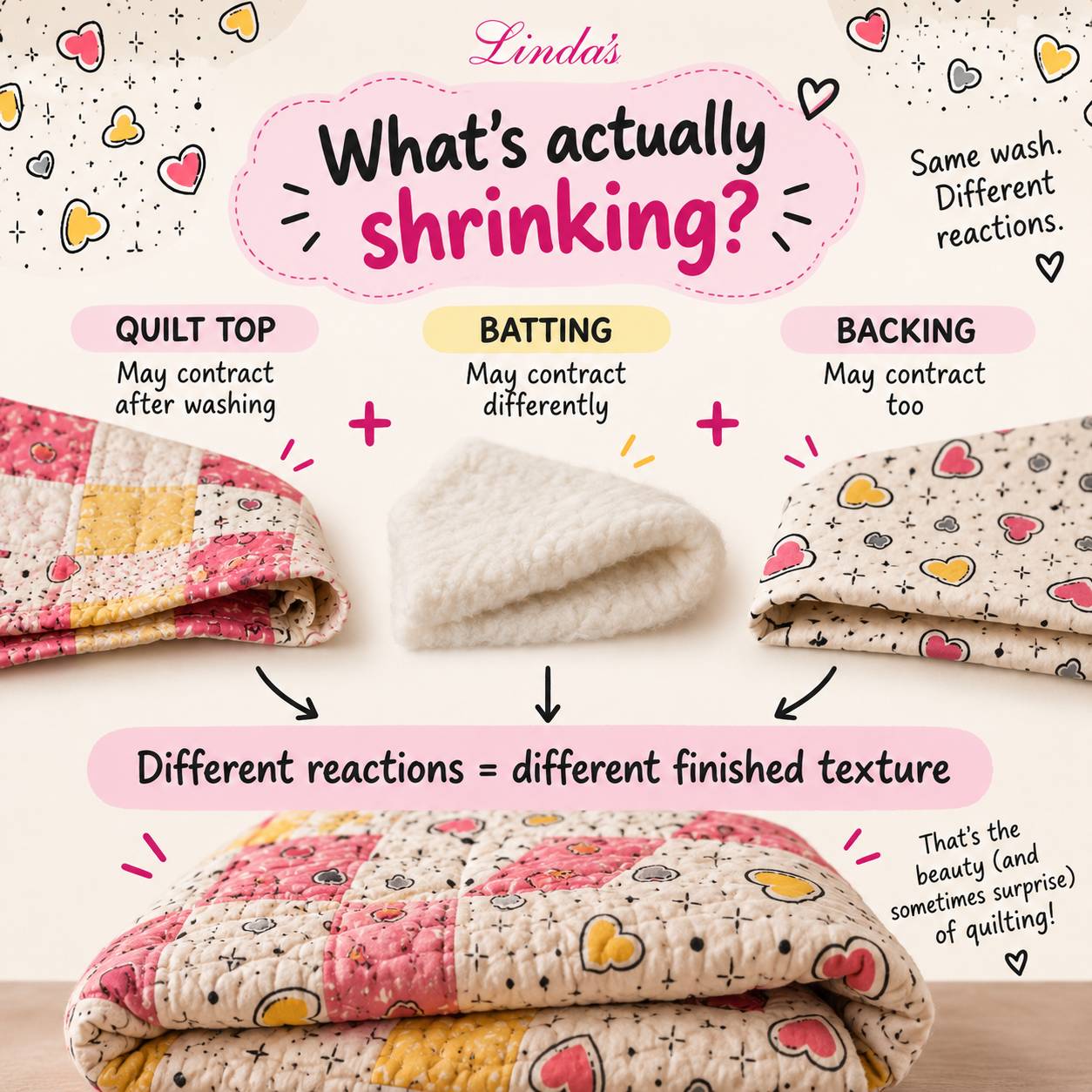
Your quilt is really three layers behaving as one: the quilt top, backing, and batting. But once water and heat enter the picture, those layers don’t necessarily behave the same way.
|
|
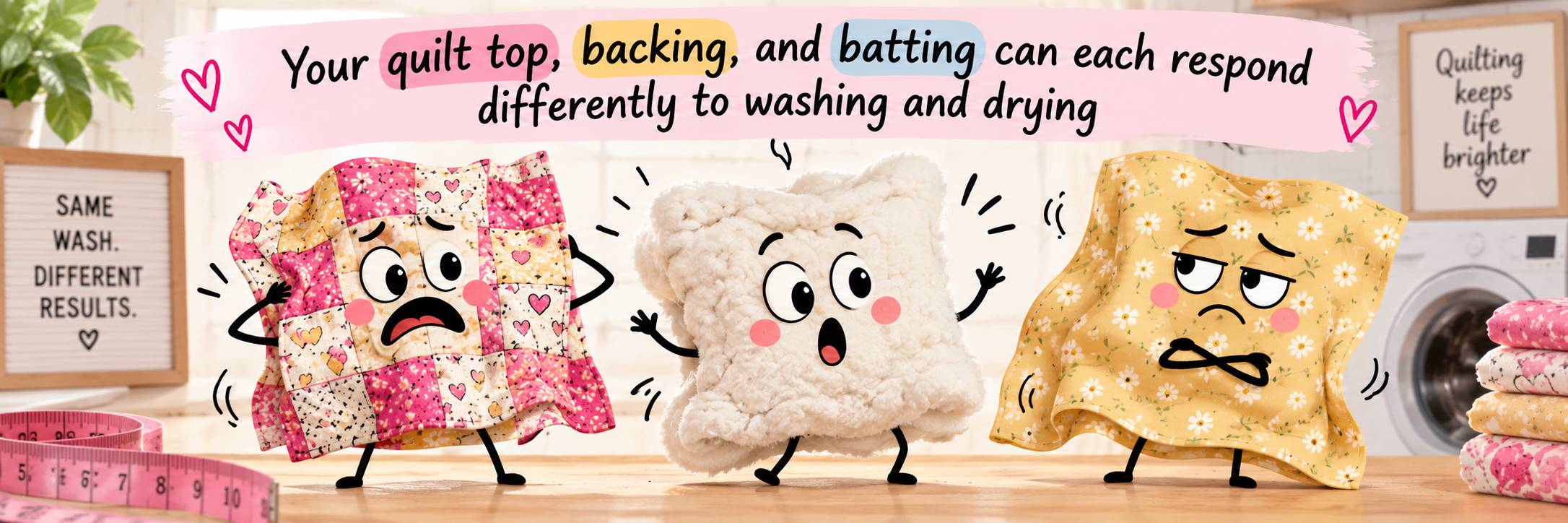
Your quilt top, backing, and batting can each respond differently to washing and drying.
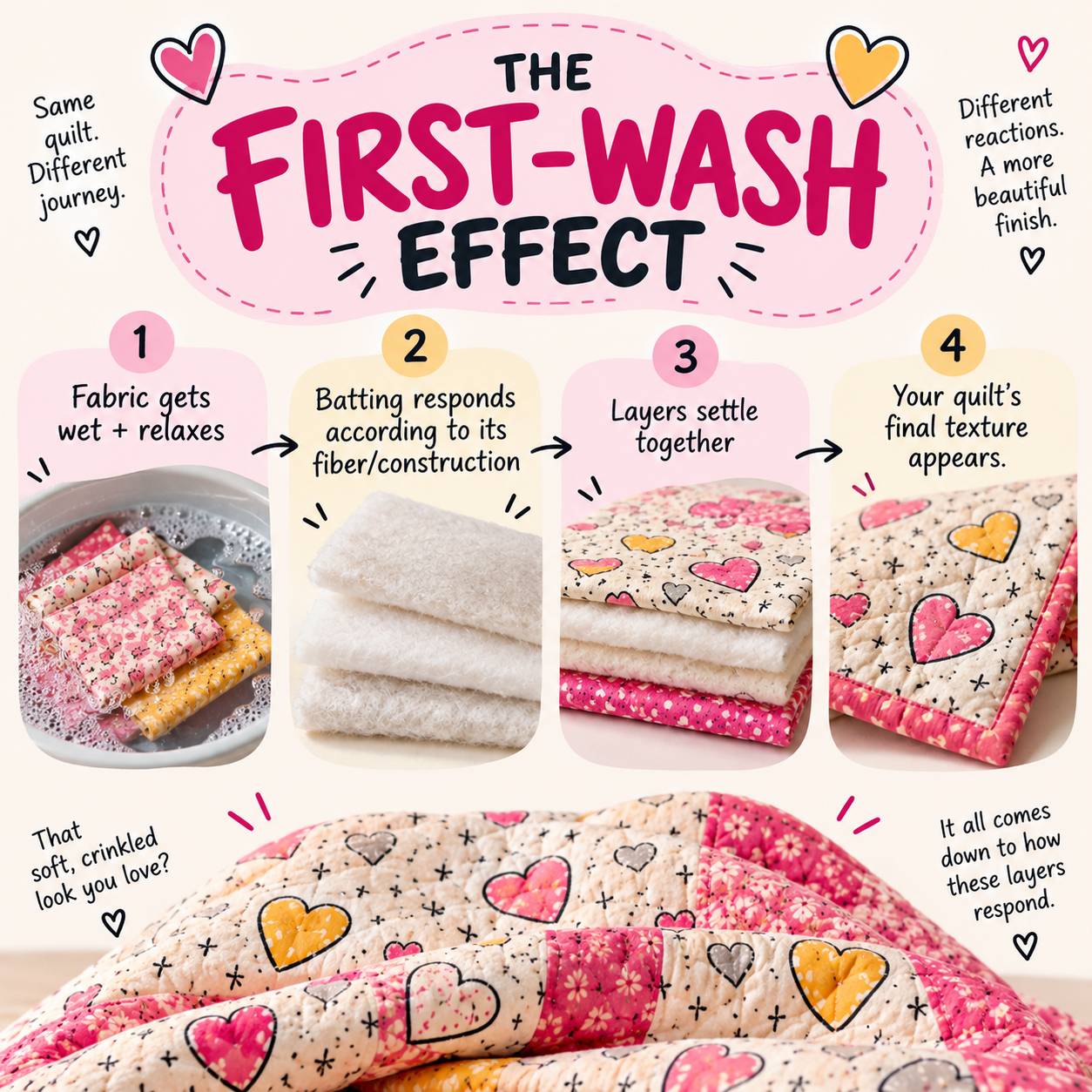
Fabric fibers can relax and contract. Batting can respond differently depending on its fiber and construction. Then, as everything dries, those layers settle together into their new shape.
The result? That first wash can reveal more texture, crinkle, or unevenness than you expected.
|
|
QUICK TIP
Want fewer surprises after the first wash?
Check the care and shrinkage information for your batting before you start quilting, then consider how it compares with your top and backing fabrics.
Knowing how each layer is expected to behave can help you better anticipate whether your finished quilt will stay relatively smooth or develop that cozy, crinkled texture.
|
|
Remember,
Batting isn’t just what goes inside your quilt, it helps shape how your quilt looks after that first wash. Knowing how your fabric and batting may react beforehand means fewer surprises and a finished quilt that looks more like the one you pictured.
Happy Quilting!
From Corey.
|
|
|
Linda's · 2001 Central Circle Suite 103, McKinney, TX 75069 US
Unsubscribe |
|




No comments:
Post a Comment